
How to Write Wedding Vows Without Sounding Like Wedding Vows
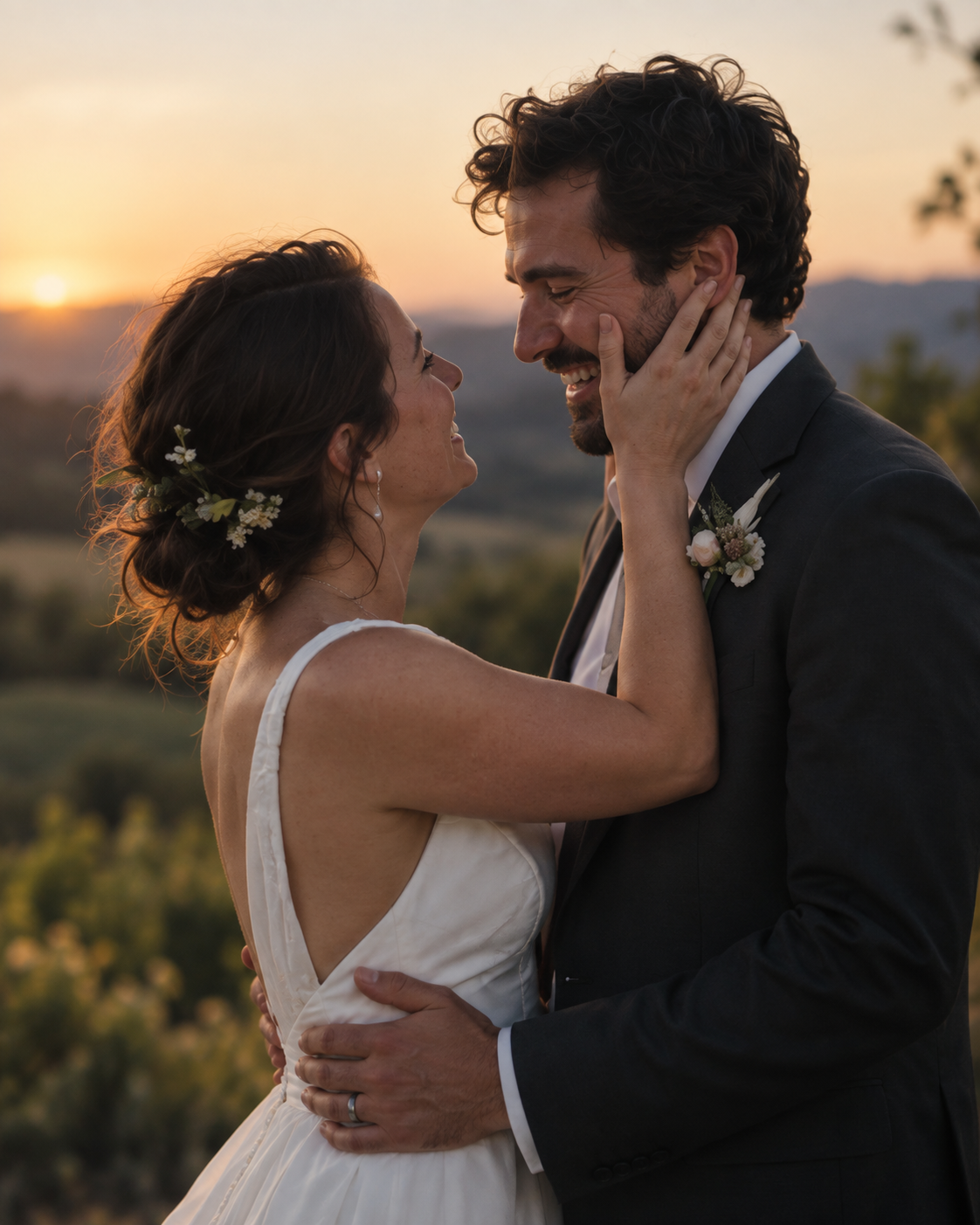
People get strange when they start writing wedding vows. Perfectly normal people who have spent years talking to each other suddenly start writing things like:
"I vow to cherish you all my days."
"You are my rock."
"You are my everything."
Maybe you really feel those things. The problem is that a thousand other couples could say exactly the same words. Your vows should sound like they came from your relationship.
Start by writing normally
Before you try to write anything beautiful, answer a few questions like a normal person.
What do you love about them? What do they do that makes your life better? What has surprised you about being together?
What do you actually want to promise them? Do not worry about making any of it sound like vows yet.
"I love that you make coffee before I am capable of speaking" is useful material.
"So grateful for our beautiful journey together" is much harder to do anything with.
Specific is almost always better.
Make some of the promises small
You should make the big promises. This is a wedding. But you do not need five versions of "I will love you forever." A few smaller promises make the larger ones feel more real.
For example:
"I promise to always support your dreams."
Perfectly nice. Also very broad. Compare it with:
"I promise to read every draft you send me, including the fourth version of chapter one."
Or:
"I promise to pull the car around when it's raining."
Or:
"I promise to listen to the story even when I already know exactly how it ends."
Those promises tell us something about the life the two of you actually have. Mix them together. A couple of big promises. A couple of small ones. That usually sounds much more like a marriage and much less like a wedding card.
A simple shape for your vows
You really only need four parts. Start somewhere real. A brief memory, the beginning of the relationship, or the moment you realized this had become serious. Keep it short. You are not telling the whole story of how you met.
Say what you love about this particular person. Try to move past adjectives. If they are generous, what do they actually do? If they make you feel safe, what does that look like in normal life? Make your promises. Three to five is plenty. Mix the important lifelong promises with smaller ones only the two of you would recognize. Finish simply. Look at them and say what you are choosing today.
That's enough. For most couples, about a minute to a minute and a half out loud is a good target. Roughly 120 to 180 words will get you close, but timing it out loud matters more than the number on the page.
Agree on the rules before you write
This is worth doing. Talk about how long the vows should be and roughly how serious or funny you both want to go. You do not need to show each other the vows. In fact, I wouldn't.
But it helps to know that one person is not preparing a ninety second, very sincere set of vows while the other has written six minutes of material and an opening joke. Agree on the container. Then write separately.
Read them out loud before the wedding
Not in your head. Out loud. Some sentences look lovely on a laptop and feel completely ridiculous coming out of your mouth.
Those are easy to fix once you hear them. The standard is not whether the sentence sounds impressive. It is whether you can stand across from this person and actually say it.
HeartSpoken's Vows path is built around that idea. You give it the memories, details, and promises that are already yours, and it helps shape them into a few different versions you can refine. It does not need to make the relationship sound more profound than it is. The meaningful part came from you.
Download HeartSpoken on the App Store
One final test before you finish: Could somebody else say these exact vows to somebody else? If the answer is yes, make them a little more yours.